
Buying a Boat
How Much Does It Really Cost to Own a Boat in 2026?
Purchase price is only the beginning. Here is the real cost of owning a boat in 2026 — from insurance and storage to winterization — and how to tell whether ownership or a boat club fits your budget.

Key Takeaways
- The purchase price is only one part of the cost of owning a boat. Insurance, storage, fuel, maintenance, winterization, and equipment continue every year you own it.
- Ownership costs fall into three buckets: one-time costs, fixed recurring costs, and usage-based costs. Budgeting each bucket separately keeps surprises to a minimum.
- In the Northeast and Mid-Atlantic, seasonality matters. Winterization, off-season storage, and spring commissioning are real line items that boaters in year-round climates never see.
- Widely cited industry rules of thumb put insurance at roughly 1 to 3 percent of a boat's insured value per year and routine maintenance in the range of 5 to 10 percent of the boat's value per year, though your actual numbers depend on the boat, your location, and how you use it.
- For some boaters — especially those on the water fewer than a few dozen days a year — a Freedom Boat Club membership can deliver most of the experience with far fewer of the responsibilities. For frequent boaters who want their own boat, their own schedule, and their own gear, ownership usually wins.
What Boat Ownership Really Costs
Ask ten boat owners what their boat costs them each year and you will get ten different answers. That is not because anyone is hiding the ball. It is because "the cost of owning a boat" is really a stack of separate costs, and every owner's stack looks a little different depending on the boat, the water, the storage arrangement, and how often the boat leaves the dock.
The most common mistake first-time buyers make is anchoring on the purchase price and treating everything else as a rounding error. A well-planned budget does the opposite. It treats the purchase as the entry ticket and builds a clear picture of the annual costs that follow.
Every ownership expense fits into one of three buckets:
- One-time costs. The purchase price, sales tax, initial registration, a trailer if you need one, and your first round of safety gear and equipment. You pay these once, or very rarely.
- Fixed recurring costs. Insurance, storage or slip fees, registration renewal, loan payments if you finance, and winterization in northern climates. These arrive on a schedule whether you use the boat every weekend or twice a summer.
- Usage-based costs. Fuel, engine hours toward the next service interval, cleaning, and wear on consumables. These scale with how much you boat.
The rest of this guide walks through each category with the ranges that matter for a typical 21- to 24-foot boat in the Mid-Atlantic and Northeast, which is the heart of the market Liberty Boat Group serves. Where we cite numbers, they are widely published industry ranges and rules of thumb, not quotes. Your actual costs will depend on your boat, your marina, and your insurer, and the best way to pin them down is to price your specific situation before you buy.
Purchase and Financing Costs
Down payment and loan structure
Most buyers finance. Marine lenders commonly look for a down payment somewhere in the range of 10 to 20 percent of the purchase price, with stronger credit and newer boats generally qualifying for better terms. Boat loans also tend to run longer than car loans. Terms of 10 to 20 years are common, which keeps monthly payments manageable but means more total interest over the life of the loan.
Two things are worth understanding before you sign:
- A longer term lowers the payment, not the cost. Stretching a loan reduces what you pay each month while increasing what you pay overall. If you plan to trade up in five years, a very long term can also leave you owing more than the boat is worth at trade-in time.
- Rates vary by boat age and loan size. Older boats and smaller loan amounts often carry higher rates. Get quotes for the actual boat you are considering rather than relying on an advertised headline rate.
Liberty Boat Group's financing calculator lets you model payments for different down payments, rates, and terms so you can see how the structure changes the math before you commit.
Taxes and registration
Sales tax on a boat purchase is set at the state level, and in the Mid-Atlantic and Northeast the rules differ meaningfully from state to state. Some states cap the tax on vessel sales, some tax boats at the general sales tax rate, and rates change, so confirm the current rules with your state's tax authority or motor vehicle and boating agency before you budget.
Registration is a smaller but recurring line. Most states require powerboats to be registered, with fees typically based on boat length and renewal cycles of one to three years depending on the state. Your state boating agency publishes the current fee schedule, and your dealer can walk you through what applies to the specific boat you are buying.
Insurance
Boat insurance is not federally required, but most lenders require it on financed boats, many marinas require liability coverage as a condition of a slip, and going without it on a five-figure asset is a risk few owners should take.
What drives your premium
Marine insurers price policies on a familiar set of factors:
- Boat type and value. A higher hull value means more to repair or replace. Performance-oriented boats generally cost more to insure than family runabouts of similar value.
- Location and navigation area. Where the boat lives and where you use it matter. Coastal exposure and hurricane-prone regions push premiums up, while inland and northern waters often price lower.
- Storage. A boat stored indoors or on a trailer in the off-season often prices better than one that sits in the water year-round.
- Operator history and experience. Claims history, boating experience, and completed safety courses all factor in. Many insurers discount for state-approved boating safety certificates.
- Coverage choices. Agreed-value coverage, higher liability limits, and lower deductibles all add premium. Actual-cash-value coverage costs less but pays out less after depreciation.
What owners typically pay
Published industry ranges put annual boat insurance premiums at roughly 1 to 3 percent of the boat's insured value for typical recreational boats, with some estimates running as high as 5 percent for higher-risk vessels. Major insurers report that many recreational policies land in the few-hundred-dollars-per-year range, commonly cited between about $300 and $600 annually, with larger, faster, or coastally stored boats running higher.
For a 21- to 24-foot boat in our region, the honest answer is that quotes vary enough that you should get one for the specific boat before you buy. It takes minutes, and it turns a guess into a real number in your budget.
Storage and Dockage
Where your boat lives when you are not on it is often the second-largest recurring cost after a loan payment, and it is the cost with the widest regional variation.
Marina slips
A wet slip gives you the most convenience: walk down the dock, load up, and go. Slip pricing is usually quoted per foot of boat length. Published market figures commonly fall in the range of $30 to $50 per foot per month in many areas, with premium locations and in-demand harbors well above that. In the Northeast, many marinas price by the season rather than the month, so ask how the season is defined and what off-season haul-out and storage add.
Dry-stack storage
Dry-stack facilities store your boat on racks indoors or under cover and launch it on request. You give up spontaneous access in exchange for better protection from sun, weather, and marine growth, and often lower maintenance costs over time. Published ranges for dry stack commonly fall between roughly $150 and $400 per month depending on the market and boat size.
Trailer storage
If your boat is trailerable, and most 21- to 24-foot boats are, keeping it on a trailer is usually the most economical option. Outdoor trailer storage lots are often cited in the range of $50 to $100 per month, and covered or indoor options cost more. Trailering also gives you flexibility that slip holders do not have: different launch ramps, different bodies of water, and the ability to shop for winter storage on price.
Home storage
Storing on your own property can bring the storage line to zero, but check first. Many municipalities and homeowners associations in our region restrict visible boat storage, and a boat that sits uncovered in a driveway through a Northeast winter will show it. If you store at home, budget for a quality cover or shrink wrap.
The regional wrinkle: seasonality
In the Mid-Atlantic and Northeast, storage is really two arrangements: an in-season one and an off-season one. Many owners pair a summer slip with winter land storage at the same marina, and marinas often package the two. When you compare storage costs, compare the full twelve-month picture, not just the summer rate.
Fuel and Routine Operating Expenses
Fuel is the cost that varies most from owner to owner, because it is driven almost entirely by behavior. A boat that idles around a river on Sunday evenings burns a fraction of what the same boat burns running offshore every Saturday.
The variables that set your fuel bill:
- Engine size and count. More horsepower burns more fuel at cruise. Twin-engine boats burn roughly twice what a comparable single burns.
- Cruising style. Fuel burn climbs steeply with speed. Owners who cruise at a moderate pace spend meaningfully less than owners who run wide open.
- Hours on the water. The single biggest factor. Track your typical outing length and frequency honestly.
- Fuel prices and where you buy. Marina fuel docks typically charge a premium over roadside stations. Trailer boaters who fill up on the highway save on every gallon.
Because those variables swing so widely, universal estimates like "expect to spend X per year on fuel" are not worth much, and we will not pretend otherwise. A more useful approach: once you have a specific boat and engine in mind, ask your dealer for that engine's published fuel-burn data at cruise, estimate your typical hours per season, and multiply by current local fuel prices. That gives you a personalized estimate grounded in real numbers.
Alongside fuel, plan for small recurring operating costs: engine oil between services, cleaning supplies, consumables like fenders, lines, and shock cords that wear out, and launch ramp or pump-out fees where they apply.

Maintenance and Repairs
Maintenance is the category that separates owners who love their boats from owners who dread them. Boats that get consistent care hold value, start reliably, and cost less over time. Deferred maintenance compounds.
Scheduled engine service
Modern outboards and sterndrives have published service intervals, typically annual or every 100 hours, whichever comes first. A routine service covers oil and filter, gear lube, fuel filters, inspection of the water pump and anodes, and greasing. Follow the schedule in your engine's manual, and keep the records. A documented service history matters at resale time.
Cleaning and detailing
Saltwater and brackish-water boaters in the Chesapeake, the coastal Mid-Atlantic, and New England should rinse the boat and flush the engine after every salt outing. Beyond that, plan on regular washing, an annual wax or ceramic treatment to protect the gelcoat, and interior care for upholstery and canvas. Do it yourself and the cost is your time plus supplies. Pay a detailer and it becomes a real annual line item.
Batteries and electronics
Marine batteries live a hard life and typically need replacement every few seasons, sooner if they winter without a maintainer. Electronics, chartplotters, and stereos are durable but not immortal, and software and chart updates sometimes carry subscription costs.
Hull, propeller, and running gear
Boats kept in the water need antifouling bottom paint, refreshed on a schedule that depends on the paint and the water. Trailer boats largely escape this cost, which is one of the quiet financial advantages of trailering. Propellers get dinged, and a reconditioned or spare prop is a normal cost of ownership. Anodes, the sacrificial metal parts that protect your drive from corrosion, are inexpensive but essential to replace as they wear.
Unexpected repairs
Every honest ownership budget includes a reserve for the repair you did not see coming: a failed trim pump, a torn canvas panel, a trailer bearing. Industry guides commonly suggest budgeting overall annual maintenance, routine plus repairs, at roughly 5 to 10 percent of the boat's value per year, with newer boats under warranty at the low end and older saltwater boats at the high end. Treat that range as a planning floor and adjust for your boat's age, engine hours, and water type.
Winterization and Spring Commissioning
This is the section boaters in Florida never read, and it is a meaningful part of the cost of owning a boat in the Northeast and Mid-Atlantic.
Winterization protects the boat through freezing temperatures: stabilizing fuel, changing gear lube, fogging or treating the engine per the manufacturer's procedure, draining or treating water systems, pulling batteries or connecting maintainers, and covering or shrink-wrapping the boat. Skipping it risks a cracked block or damaged systems, repairs that dwarf the cost of doing it right.
Off-season storage in our region typically means land storage from roughly late fall through mid-spring, indoors or outdoors, at a marina, a storage yard, or home.
Spring commissioning reverses the process: de-winterizing the engine, reinstalling batteries, checking systems, and launching.
Published planning figures for full-service winterization plus storage in northern climates commonly fall in the range of about $1,500 to $3,000 per season, with wide variation based on boat size, engine type, indoor versus outdoor storage, and how much of the work you do yourself. Handy owners with a trailer boat and a garage can bring this number down substantially. Owners of larger boats in premium indoor storage will exceed it. Either way, put a real number in your budget, because in this region the season you are protecting the boat is nearly as long as the season you are using it.
Equipment and Safety Costs
New boats rarely come with everything you need to leave the dock legally and comfortably. Plan an initial outfitting budget for:
- Life jackets. A properly sized, Coast Guard-approved life jacket for every person aboard is required, and kids' sizes matter. Buy for your actual crew, including the friends you will inevitably bring.
- Required safety gear. Depending on boat size and waters: fire extinguisher, visual distress signals, sound-producing device, throwable flotation, and navigation lights in working order. Your state's boating handbook lists exactly what applies.
- Ground tackle and lines. Anchor and rode suited to your local bottom, dock lines, and fenders.
- Electronics. Many boats include a chartplotter and fishfinder. If yours does not, or you want more capability, price it into year one. A VHF radio is strongly recommended for coastal boating.
- Covers and canvas. A quality mooring cover extends the life of upholstery and reduces cleaning. Biminis and enclosures add comfort and cost.
- Trailer. If you plan to trailer and the boat is not packaged with one, this is a significant one-time purchase, plus ongoing registration, tires, and bearing maintenance.
Equipment is also not entirely one-time. Flares expire, lines chafe, fire extinguishers age out, and electronics eventually get upgraded. A modest annual equipment allowance keeps the budget honest.
Depreciation and Resale Value
Depreciation is the cost nobody writes a check for, which is why it gets ignored, and it is often one of the largest real costs of ownership.
Like vehicles, boats generally lose value fastest in their first few years and depreciate more slowly afterward. But unlike the car market, boat values are shaped by factors owners partially control:
- Maintenance records. A documented service history is one of the strongest value signals a used boat can have.
- Engine hours relative to age. Buyers look at hours the way car buyers look at miles, in context. Very low hours on an older boat can even raise questions about how it was stored.
- Freshwater versus saltwater history. Boats used in salt typically show more wear on running gear and hardware, and buyers price accordingly.
- Storage. Covered or indoor storage protects gelcoat, upholstery, and canvas, and it shows at resale.
- Brand and segment demand. Popular, well-supported brands and versatile layouts hold value better because more buyers want them.
No one can guarantee what any boat will be worth in five years, and you should be skeptical of anyone who promises a resale number. What you can do is buy a boat with broad appeal, maintain it on schedule, store it well, and keep the paperwork. Those habits do not eliminate depreciation, but they consistently put boats at the strong end of their market when it is time to sell or trade.
Boat Ownership Versus Freedom Boat Club
Everything above is the case for going in with clear eyes, not the case against owning a boat. Ownership is the right answer for a lot of boaters. But it is not the only way onto the water, and for some households a Freedom Boat Club membership is the better fit. Here is how the two paths actually compare.
What ownership gives you
- Total control. Your boat, your schedule, your gear rigged your way. Leave the dock at 5 a.m. for a striper bite, stay out past sunset, raft up overnight. No reservations, no return times.
- Customization. Your electronics, your rod holders, your tow pylon, your name on the transom.
- One boat you know completely. Familiarity breeds confidence, especially in changing conditions.
- Trailer freedom. Owners of trailerable boats can chase new water anytime.
- Equity. Payments build toward an asset you can eventually sell or trade, unlike membership dues.
The tradeoff is everything in this article: the costs, and just as importantly, the time. Maintenance, cleaning, winterization logistics, and storage decisions are part of the deal.
What Freedom Boat Club gives you
- Predictable cost. A one-time entry fee and flat monthly dues cover the fleet, insurance on club boats, maintenance, cleaning, storage, and winterization. Fuel is typically your main variable cost. Pricing varies by location and plan, so talk to the local club for current numbers rather than trusting anything you read online.
- Zero maintenance responsibility. You show up, the boat is ready. You leave, someone else washes it.
- Variety. Access to different boat types across the fleet, a fishing boat this weekend and a pontoon with the family next weekend, plus reciprocal access at club locations when you travel.
- A lower-commitment on-ramp. Training is included, and there is no purchase, no storage decision, and no resale to worry about if life changes.
The tradeoffs are real too: reservations instead of spontaneity, shared boats instead of your own, standard club rigging instead of your customization, and dues that build no equity.
Who fits which path
Ownership tends to win for boaters who: get out frequently across the season, fish or ride on their own schedule including early mornings and overnights, want specific gear and rigging, trailer to different waters, or simply want the pride and permanence of their own boat.
The club tends to win for boaters who: expect to boat occasionally rather than constantly, are new to boating and want included training and support, travel often and value reciprocal access, have no good storage option, or want to test the boating lifestyle before committing to a purchase.
Plenty of people move between the two over time. Club members become owners once they know exactly what boat they want. Owners downsizing their time on the water move to the club. Neither is a one-way door, and Liberty Boat Group is one of the few places that can genuinely help you with both. For a deeper side-by-side, read our full comparison of a boat club versus buying a boat.
How to Calculate Your Own Ownership Budget
Generic averages get you oriented. Your budget gets you a decision. Work through this checklist with real quotes for the actual boat you are considering:
One-time costs
- Purchase price (negotiated, not listed)
- Sales tax per your state's current rules
- Initial registration and titling fees
- Trailer, if needed
- Initial safety gear and equipment outfitting
- Delivery, rigging, or sea-trial costs if applicable
Fixed annual costs
- Loan payments (model a real rate quote with the financing calculator)
- Insurance (get a quote for this hull, your waters, your storage plan)
- In-season slip, dry stack, or trailer storage
- Off-season storage
- Winterization and spring commissioning
- Registration renewal
- Scheduled engine service
Usage-based annual costs
- Fuel: engine's published burn at cruise x your estimated hours x local price
- Cleaning and detailing
- Consumables and small gear replacement
- Repair reserve (start with the 5 to 10 percent-of-value planning range and adjust for age and water type)
Add the three sections, then divide the annual total by the number of days you honestly expect to be on the water. That cost-per-day number, compared against what a club membership or charter days would cost you, is the clearest single figure for deciding whether ownership fits right now.
If the numbers work, the next step is finding the right boat — and our companion guide to choosing between a center console, dual console, and bowrider can help you pick the layout that fits how you boat. If they do not work yet, the water is still open to you through the club. Either way, you have a real plan instead of a guess.
Browse Boats for Sale Explore Freedom Boat Club
Frequently Asked Questions
How much does it cost to own a boat each year?
There is no single number, because annual costs depend on the boat's value, where you store it, your climate, and how much you use it. The major categories are insurance, storage, fuel, maintenance, winterization in northern climates, registration, and loan payments if you finance. The most reliable approach is to price each category for your specific boat and location using the checklist above. Industry rules of thumb, such as insurance near 1 to 3 percent of boat value and maintenance near 5 to 10 percent of boat value annually, are planning starting points, not promises.
What is the average monthly cost of boat ownership?
Averages are published, but they blend everything from jon boats on trailers to yachts in coastal marinas, so they say little about your situation. A more useful exercise is to total your own projected annual costs, including seasonal items like winterization that do not arrive monthly, and divide by twelve. For many owners of trailered boats in this size range, the monthly picture is dominated by the loan payment. For slip-kept boats, storage often rivals or exceeds it.
How much should a boat owner budget for maintenance?
Widely cited industry guidance suggests planning for roughly 5 to 10 percent of the boat's value per year across routine service, upkeep, and a repair reserve. New boats under warranty typically land below that range, while older boats used in saltwater land at or above it. Whatever number you choose, following the engine manufacturer's service schedule and keeping records is the best way to keep long-term maintenance costs, and depreciation, under control.
Is a boat club less expensive than owning a boat?
It depends almost entirely on how often you boat. Club dues are predictable and cover maintenance, storage, insurance on club boats, and winterization, so for occasional boaters the club is frequently the lower-cost path per day on the water. Frequent boaters spread ownership's fixed costs across many outings, which drives their cost per day down and often makes ownership the better value, along with the control and equity it brings. Run the cost-per-day comparison in the budgeting section above with real local numbers for both options.
What boat expenses do first-time buyers commonly overlook?
The most common surprises are sales tax at purchase, the full twelve-month storage picture rather than just the summer slip, winterization and spring commissioning, initial equipment outfitting, trailer costs including registration and tire and bearing upkeep, marina fuel prices versus roadside prices, and the repair reserve for the unexpected. Depreciation is the least visible cost of all, and buyers who choose broadly appealing boats and maintain them well feel it least.
Ready to start looking?
Browse current inventory, or estimate a monthly payment before you fall in love with a hull.
Related articles
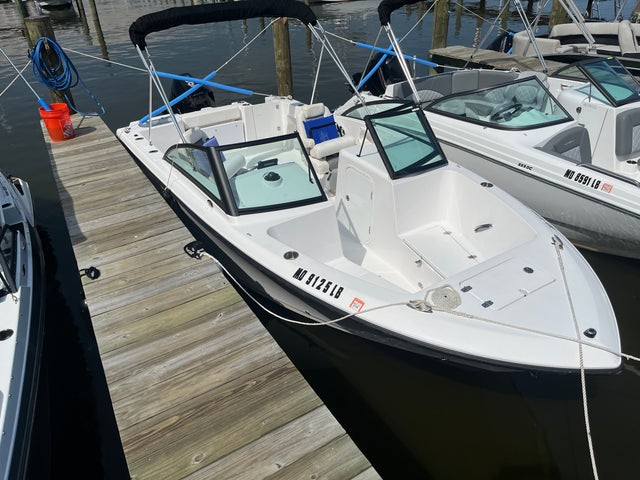
Center Console vs Dual Console vs Bowrider: Choosing a 22-Footer
Shopping for a 21- to 24-foot boat? Here is how center console, dual console, and bowrider layouts compare for fishing,...
Read article →
10 Best Boating Day Trips from Annapolis and the Chesapeake
Annapolis is one of the best launch points on the Chesapeake Bay because it gives boaters a rare mix of...
Read article →
Boat Club vs. Buying a Boat: Which Makes Sense for Mid-Atlantic Boaters?
For many boaters in the Mid‑Atlantic, the dream is simple: more time on the water, less stress getting there, and...
Read article →